A key role or organizational change is pending.
Is the role needed in this form — and can a suitable person be effective in it? A wrong appointment locks in cost and delays correction.
Discuss this decision
For executives, owners, boards and supervisory boards
Personal advisory support for economically significant management questions.
An important issue is absorbing internal time, but the decision is not moving forward? We take on the focused analysis, compare your options and clarify the implications for earnings, cash and capacity.
Discuss a management questionYour result: a written recommendation with alternatives, conditions, responsibilities and missing evidence.
The engagement
You bring a concrete issue and its decision deadline. We structure the evidence, compare serious alternatives and prepare the next decision. Personally led by Klaus Welles.
What you buy
No software introduction required. Target duration: ten working days after the agreed information and interview access are available. A fixed fee and schedule are agreed after a short clarification.
Decision, alternatives, recommendation and conditions.
Evidence, competing explanations and remaining uncertainty.
New commitments, the people carrying them, displaced work and rights to change or stop.
Owner, date, outcome measure and reason to reassess.
Is the role needed in this form — and can a suitable person be effective in it? A wrong appointment locks in cost and delays correction.
Discuss this decisionIs the cause people, processes, priorities, capacity or missing decision rights? The review separates the symptom from the decision that is being avoided.
Discuss this decisionDoes the proposal address a proven bottleneck? We compare benefits, total effort and alternatives — including process changes, standard software or a smaller start.
Discuss this decisionThe Decision Review provides a bounded basis for a decision. Organizational design is a separate follow-on engagement: together, we develop the roles, authority, priorities and transition needed to make implementation viable.
Before your next commitment
Fund growth. Serve customers reliably. Develop new technologies. Protect earnings.
Each decision may be well justified on its own. Yet several initiatives can require the same key people, the same capital and the same decision-making time.
Before hiring, investment or reorganization, Welles & Welles examines:
Trust also depends on making commitments deliverable and disclosing necessary changes in time. We examine who must act when conditions change, who may adjust the commitment and how the consequences for customers, ongoing work and the people responsible will be addressed.
You receive a written recommendation: which alternative appears viable under which conditions, what economic evidence is missing and what must be clarified before the next step.
Which of your pending decisions requires resources already committed to other promises?
Discuss this decisionIn that case, we specify the missing evidence and how to obtain it. We do not guarantee a correct decision or grant approval. Responsibility remains with the client's decision-maker.
A fixed fee is agreed for the defined scope before work starts. Implementation, recruitment, a full company diagnosis and legal or technical approvals are not included. Any follow-on assignment is commissioned separately; potential commercial interests are disclosed. This is a decision review, not an executive search mandate, management consulting retainer or approval process.
TOOD structures the decision review; SOA LUMEN examines whether the organization can carry its consequences. The Decision Controller supports documentation. These are working tools, not a certified system or autonomous decision software. Confidential material is processed only under agreed access and data-handling rules.
The result
Illustrative sample, not a client document. The value is not the format; it is the separation of evidence, assumption, counter-position and responsibility before commitment.
Should the group roll out a shared customer platform this year?
Sales, finance and operations work with different customer priorities and data.
A common system will automatically create common action.
Define one cash-relevant process and accountable owner first; pilot before a group-wide rollout.
No one currently owns data quality, customer priority and the decision to stop the rollout.
Human decision risk
People often act understandably within their role — with effects that become expensive for the whole company. That is why a review must examine the protection dynamics around a decision.
A previous recommendation is defended although new evidence points elsewhere.
Projects continue, capital remains committed and correction becomes more expensive.Dissent is withheld to protect status, relationships or apparent harmony.
False consensus replaces the counter-position the decision actually needs.A system, project or appointment is started before the problem, mandate and outcome are clear.
Activity increases while responsibility, result and opportunity remain unclear.Loss aversion, confirmation bias, authority pressure, planning optimism, responsibility shifting, territorial interests and habituation to failure.
The mandate
The Board Mirror is a brief self-check. It identifies questions to examine, not whether a decision is approved or ready.
The visible problem
Seven everyday symptoms. Click once to follow each one from observation to cause, economic effect and decision.

The common core
Companies now need to do two things: deliver what already matters under changed conditions – and develop what markets and customers will need next.
Both can fail for the same reason: the required performance is unclear, responsibility remains distributed, decisions are deferred and people are expected to compensate for a form that does not enable their work.
We do more than examine whether your organization can carry a decision. Under a separate organizational design engagement, we work with you to define what must change: roles, decision rights, priorities, interfaces and the transition into execution.
Typical mandates
Anonymized typical constellations. They show the chain from visible problem to hidden load, missing mandate and economic consequence. They are not claimed client results.
The executive team wants to hire a sales, operations or transformation leader because results, growth or execution remain below expectations.
After growth, a merger or result pressure, new central functions, committees and interfaces are added to make the organization more manageable.
A company wants CRM, AI or automation to improve customer activity, collections, planning or inside sales.
Public decisions
Four public corporate decisions show how growth, complexity, integration and economic pressure become unresolved performance and responsibility problems.
Observation. Uber describes more layers, fragmented ownership and too much coordination. It is reducing its team by about 10 percent, combining teams and clarifying decision rights.
SOA/TOOD question. How must Uber be organized so capital and people return to building, innovation and customer performance instead of alignment work?
Observation. Volkswagen plans to reduce model and offering complexity, adjust capacity and simplify decision structures.
SOA/TOOD question. Is reducing complexity enough – or must responsibilities, capabilities and decisions for the next competitive performance be rebuilt at the same time?
Observation. Smurfit Westrock is integrating markets, regions, plants and customer organizations while optimizing sites and emphasizing innovation and service as growth levers.
SOA/TOOD question. Where has the merger already created shared performance – and where do parallel responsibilities, cultures or decision paths remain?
Observation. Graphic Packaging combines cost reduction, portfolio focus, capital discipline and a realigned global customer organization with continued emphasis on innovation and service.
SOA/TOOD question. Is the structure merely smaller – or actually more capable of delivering customer performance, cash and innovation at the same time?
04 · Welles & Welles
I build organizations from responsibility carried in practice — not from organization charts.
I have worked in mid-sized, growth- and innovation-oriented companies, shaped two Greenfield projects from the ground up and helped build substantial growth in practice. At the same time, I have more than 20 years of experience in recruitment and coaching. I know both sides: the performance the company must create and the people who must be able to carry it in a real role.
This is the foundation of my work as a Sustainable Organizational Architect. It has shown me which weaknesses are often treated as normal: unclear responsibility, missing decision rights, overloaded key people and solutions that sound plausible but cannot carry their consequences. I help build solutions that work economically, can be executed organizationally and remain viable over time.
03 · Capital, Risk & Resilience
Growth, investment and reorganization commit capital. The question is not only whether a solution sounds plausible – but whether it actually protects results, operating capacity and responsibility.
I examine the assumptions carrying the decision, where economic or organizational risk appears, and who is factually carrying the consequences. This shows whether a measure creates value, protects value or only creates additional coordination load.
01 · Organizational load
Companies often respond to new demands with additional roles, committees, interfaces and systems. Each measure may be reasonable on its own. Together, they can create an organization nobody fully sees and where responsibility fragments.
The load then moves to executives, key people and operating teams. It appears late as overload, conflict, failed appointments, delay or loss of results. The first question is therefore not who to hire, but whether the organization can carry the required performance.
03 · From performance to role
New technologies and business models first change the performance the company must deliver. From that follow tasks, interfaces, decision rights and responsibility.
Before replacing a person or filling a position, we examine whether people are compensating for missing decision rights, unclear priorities or insufficient resources. Those accountable for results need matching authority; those setting priorities must answer for the consequences. This informs a workable role mandate.
04 · Human intelligence
A role can be technically correct and still fail in reality.
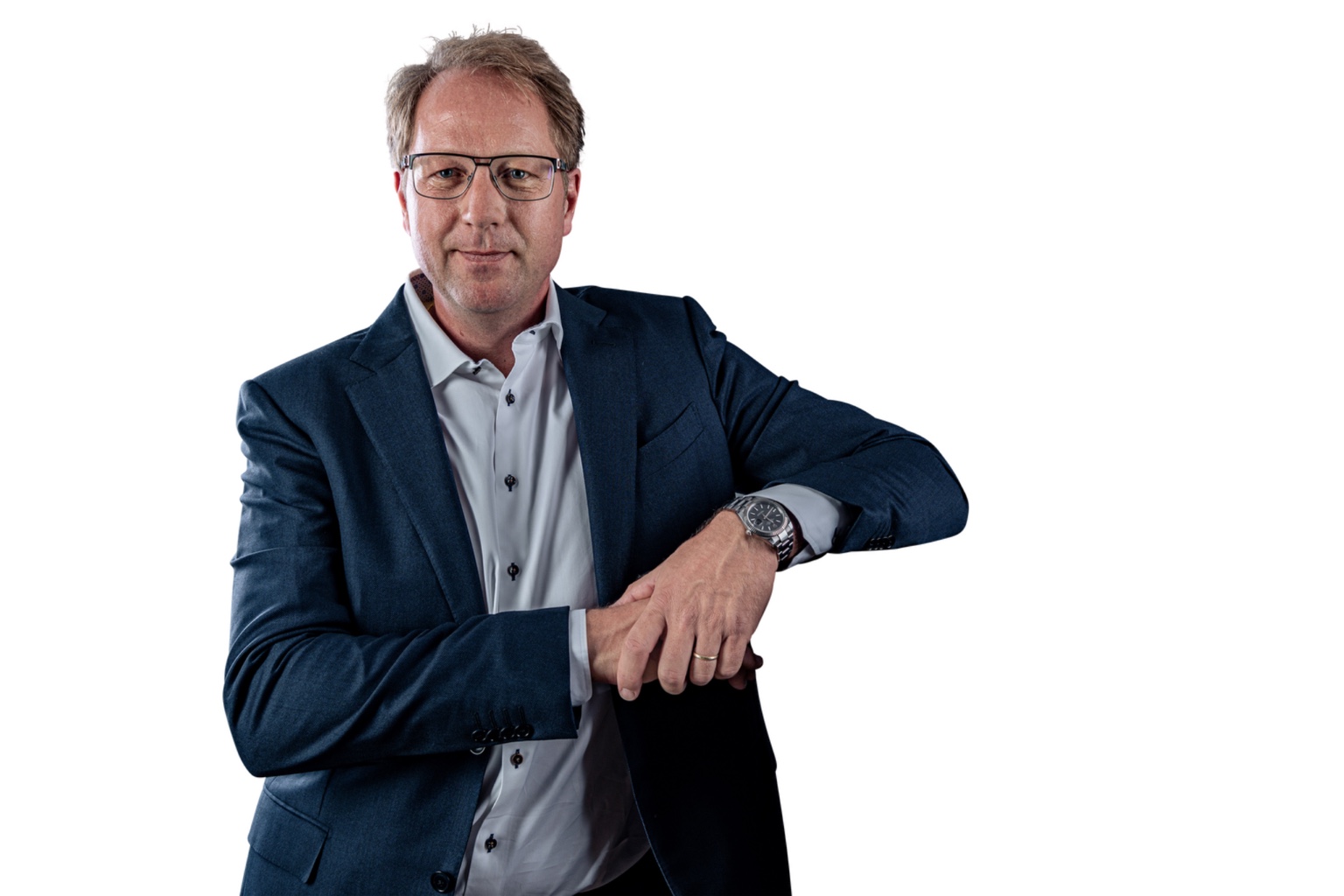
Claus M. Welles combines more than 20 years of human insight with psychological understanding. He examines how people think, decide, handle pressure and carry responsibility – always in relation to the role, the environment and its actual requirements.
The agent supports the work. The human sets direction and carries responsibility.
05 · Controlled decision process
AI, TOOD and SOA LUMEN are not a technical end in themselves. They create relief: less unnecessary complexity, more time for judgment, customers, creativity and collaboration.
The search space grows before the solution narrows.
The decision becomes testable, not merely plausible.
Identified gaps become specific requirements for roles, authority, resources and transitions.
The thinking behind the review
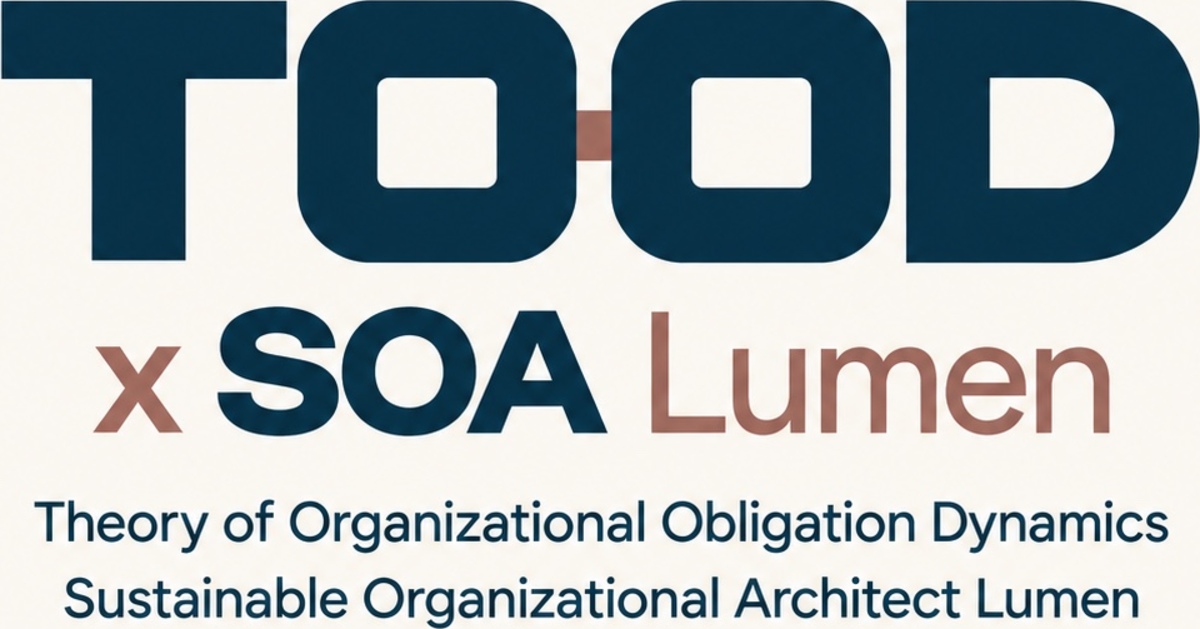
SOA – Sustainable Organizational Architecture is the discipline of structural viability developed by Klaus Welles. It connects economic performance with responsibility, power, capacity and human dignity.
TOOD – Theory of Organizational Obligation Dynamics – examines decisions, commitments and their economic foundations. SOA LUMEN makes organizational prerequisites testable and actionable: who carries the work, who may decide, and what roles, resources and transitions are needed? The decision remains with the authorized decision-maker.
Decision→Obligation→Responsibility→Mandate→Execution→Impact
Anonymized case analysis
An analysis separated economically viable initiatives from activities that were consuming substantial time, capital and management attention.
In the CFO’s assessment, this clarity could have saved around eight months of development time and an investor round. The capital tied up was, according to his estimate, in the double-digit million range.
The case is anonymized. The company name, specific amounts and statements will only be published with explicit permission.
06 · Contact
In a first confidential conversation, we clarify the decision that is actually pending, whether a structured review is useful and whether Welles & Welles is the right partner.
Start the conversation09 · Perspectives
Short perspectives on the loads, risks and opportunities behind a decision – for people who want to shape the next viable form, not merely react to it.
A board needs more than hindsight: it needs a better view of the decisions that lie ahead.
Contribute to the futureNot deciding commits capital, extends load and shifts responsibility. Waiting also needs a clear economic view.
Make delay visibleWhen new performance must emerge, its responsibility and working space must be built first – then the people solution.
Build a viable form